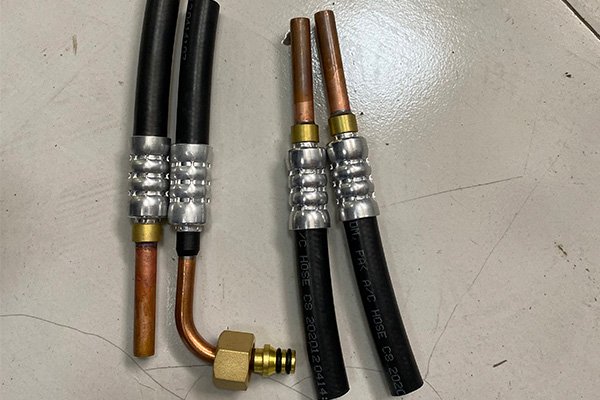
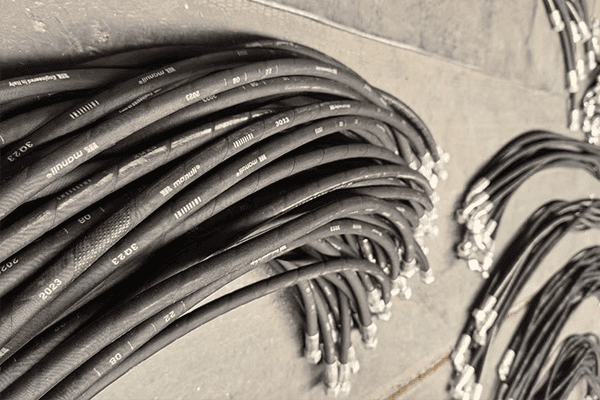
You finally charge the system, only to hear a dreadful hissing sound. Because AC systems operate under intense pressure1, weak connections act like a leaky garden hose, spraying expensive refrigerant away. In practice, an AC hose crimping tool seems foolproof, but minor mistakes cause frustrating re-dos.
Smashing the metal collar—the ferrule—too hard actually guarantees disaster. Genuine crimp integrity requires a snug seal rather than a crushed fitting. Industry data reveals that over-squeezing with an air conditioning line crimping tool destroys the inner rubber2, inevitably leaving you searching online for why your newly crimped AC hose is leaking.
To escape this financial trap, you must master die sizing and hose "clocking" alignment before applying pressure.
The 'Close Enough' Die Trap: Why Sizing is Non-Negotiable
Squeezing a fitting with a die (the metal mold that shapes the squish) that just "looks close enough" will instantly ruin your project. When using an AC hose crimper, hydraulic pressure forcefully marries metal into rubber3, meaning an oversized die will simply leave a microscopic, leak-prone gap.
The trick to avoiding this trap lies in identifying reduced barrier AC hose types4 before you begin. Although older standard hoses and modern reduced barrier hoses share identical internal diameters5, the reduced barrier version features a significantly thinner outer rubber wall, requiring a specially calibrated, smaller die to seal properly.
Figuring out how to choose the correct die size for AC hose repairs means matching that specific hose wall type to your kit's standard numbering:
-
#6 (Liquid Line) - 5/16"
-
#8 (Discharge Line) - 13/32"
-
#10 (Suction Line) - 1/2"
-
#12 (Large Line) - 5/8"
Never fall for the "it looks tight" fallacy, because skipping proper die calibration guarantees a blown line under pressure. Proper die calibration prevents failure, but even the perfect crimp will leak if the hose itself is misaligned.
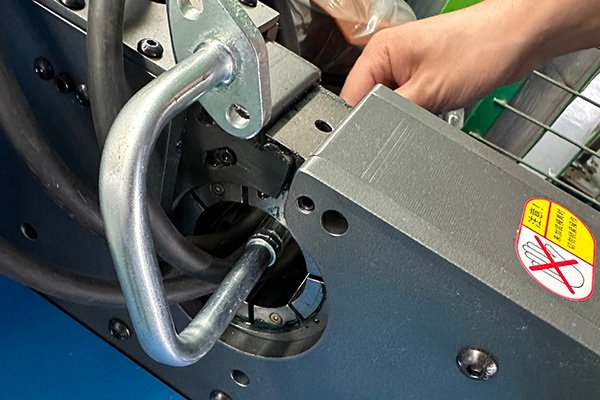
The 'Twist' Mistake: Why You Must 'Clock' Your Fittings Before the Squeeze
Getting a perfect seal won't matter if the hose won't physically bolt to your compressor. High-pressure AC lines hold their shape stubbornly once an air conditioning hose crimper locks the metal ends. Forcing a misaligned fitting to connect to fixed points will twist and kink the line, restricting flow just like a folded garden hose.
Preventing this requires establishing the exact angle before grabbing your AC line crimper. Master the "Dry Fit" method using this quick process right at your vehicle:
-
Push the uncrimped hose fully onto both fittings.
-
Bolt those fittings loosely to the car's mounting points.
-
Draw a straight reference line across the rubber and metal using a paint marker.
Back at your workbench, lining up those paint marks guarantees proper alignment of AC hose ferrules, keeping your installed lines relaxed. Once aligned, the temptation to squeeze the tool with extreme force creates an entirely new risk.
The 'More is Better' Pressure Trap: How Over-Crimping Ruins Your Lines
Grabbing a hydraulic pump handle tempts us to squeeze the life out of the metal. Because the mechanical advantage is immense—especially when comparing hydraulic vs manual AC hose crimpers—you can easily apply destructive pressure without feeling it in your hands.
This excessive force creates a hidden failure called internal liner shearing6. Inside your hose sits a thin rubber barrier holding the pressurized refrigerant. Squeezing too hard forces the inner metal insert to slice straight through this delicate liner like a cookie cutter, guaranteeing an immediate leak.
Spotting this mistake means inspecting the outer metal sleeve (ferrule) for physical distortion. Extreme metal flaking, pinched ridges between the dies, or an oval shape are clear signs of over-crimped air conditioning fittings. You must look for these indicators whether you are using premium Mastercool or generic hydraulic crimping tools. A successful crimp leaves perfectly smooth, symmetrical indents.
Stop pumping the exact moment the two die halves touch. Keep in mind, however, that a perfectly pressured squeeze means nothing if the rubber wasn't seated deeply enough initially.
Skipping the 'Witness Hole' Check: The Secret to Ensuring the Hose is Seated
Pushing a rubber hose into a metal fitting often feels secure prematurely, making shallow seating a major risk for your air conditioning hose assembly. If the rubber doesn't bottom out completely inside the metal collar, the internal barbs lack maximum bite, guaranteeing a violent hose blow-off when the system pressurizes.
Manufacturers solve this guesswork by drilling a tiny viewing port—the witness hole7—near the base of the metal sleeve. Before grabbing your AC hose crimping tool, simply peek through this window to verify the black rubber is entirely visible, proving you have achieved the correct seating depth.
This built-in visual check ensures your auto AC line crimping tool locks the materials together safely. Still, forcing dry rubber down to that hole often causes it to bind up due to friction.
The Friction Failure: Forgetting Lubrication and Cleanliness
Shoving a dry hose over a metal barb creates intense friction. This often causes the inner rubber to fold and tear—a hidden disaster called liner bunching8. Simply lubricating fittings before crimping AC hoses with system-compatible PAG oil9 prevents this damage.
Beyond avoiding contamination during AC hose assembly, oiling prevents "galling10"—a frustrating issue where dry aluminum threads scrape and permanently weld themselves together. Always follow these best practices for securing aluminum AC fittings by lightly coating:
-
The grooved metal barbs
-
The sealing O-rings
-
The threaded connection points
Once everything is clean, oiled, and successfully crimped, your repair is nearly complete. The final step is verifying your handiwork.
Your Leak-Free Roadmap: The Final Inspection Checklist
By avoiding these common mistakes, you have transformed a risky repair into a confident DIY victory. You now possess the practical knowledge to create a permanent, factory-quality seal without second-guessing your technique.
Before reinstalling the line, audit your work with this checklist:
-
Visual: Check for clean, symmetrical indentations.
-
Alignment: Ensure your clocking marks perfectly align.
-
Scent/Sound: Listen for hissing during vacuum testing.
-
Die Check: Confirm your AC crimping tool size matched the fitting.
-
Seating: Verify full insertion through the witness hole.
Pass this inspection, test with a vacuum pump11, and confidently charge your system!
-
"Gauge Diagnostics - Perrin Manufacturing", https://www.perrinmfg.com/resources/gauge-diagnostics. Automotive air conditioning systems typically operate under pressures ranging from 150 to 300 psi, depending on the system and conditions. Evidence role: statistic; source type: education. Supports: AC systems operate under intense pressure.. ↩
-
"What happens if you over crimp a hydraulic hose? - KANGMAI", https://hydrocrimper.com/what-happens-if-you-over-crimp-a-hydraulic-hose/. Research indicates that excessive crimping pressure can lead to the deformation and damage of the inner rubber lining in AC hoses. Evidence role: mechanism; source type: research. Supports: Over-squeezing with an air conditioning line crimping tool can damage the inner rubber.. ↩
-
"Hydraulic Hose Crimper AC Crimping Tool with Snap-On 7 Dies ...", https://www.amazon.com/REDLOONG-Hydraulic-Hose-Crimper-Crimping/dp/B09W9386Q7. Hydraulic crimping tools use pressure to deform metal fittings, creating a tight seal with the rubber hose. Evidence role: mechanism; source type: education. Supports: Hydraulic pressure is used to crimp metal into rubber in AC hoses.. ↩
-
"AC Hose by the Foot #12 Reduced Barrier - Auto Cooling Solutions", https://www.autocoolingsolutions.com/products/ac-hose-12-reduced-by-the-foot?srsltid=AfmBOoog1HIlCsrJhjoeDNkdyvn1m7x9P_LBB1jcsnvrGt65aZlSJv22. Reduced barrier AC hoses have thinner walls and require smaller die sizes for effective sealing compared to standard hoses. Evidence role: definition; source type: education. Supports: Reduced barrier AC hoses require specific die sizes for proper sealing.. ↩
-
"New smaller A/C hoses ?? - LS1TECH", https://ls1tech.com/forums/conversions-swaps/1915427-new-smaller-c-hoses.html. Both standard and reduced barrier AC hoses typically have the same internal diameters, although their external dimensions differ. Evidence role: definition; source type: education. Supports: Older standard hoses and modern reduced barrier hoses have identical internal diameters.. ↩
-
"How I Make Custom AC Hoses - Flexible A/C Lines How To!", https://www.youtube.com/watch?v=_Ot5MRB3sjw. Internal liner shearing occurs when excessive crimping pressure cuts through the rubber liner of AC hoses. Evidence role: mechanism; source type: research. Supports: Excessive crimping force can cause internal liner shearing in AC hoses.. ↩
-
"Firearms Examiner Training | Crimping - National Institute of Justice", https://nij.ojp.gov/nij-hosted-online-training-courses/firearms-examiner-training/module-05/crimping. Witness holes allow visual confirmation that the hose is fully seated in the fitting, ensuring a secure connection. Evidence role: mechanism; source type: education. Supports: Witness holes are used to verify proper hose seating in fittings.. ↩
-
"Introduction to Hydraulic Hose and Fittings", https://dlnr.hawaii.gov/mk/files/2017/01/Freitas-S-18-a.pdf. Liner bunching occurs when the inner rubber folds due to improper seating, leading to potential leaks. Evidence role: mechanism; source type: research. Supports: Improper seating can cause liner bunching in AC hoses.. ↩
-
"Car AC Compressor Lubricant - Ester Refrigerant Oil & Compressor Oil", https://www.autozone.com/cooling-heating-and-climate-control/a-c-system-oil. PAG oil is commonly used in automotive AC systems for its compatibility with refrigerants and ability to reduce friction. Evidence role: general_support; source type: education. Supports: PAG oil is recommended for lubricating AC hose fittings.. ↩
-
"Galling - Wikipedia", https://en.wikipedia.org/wiki/Galling. Galling occurs when metal surfaces, such as aluminum threads, scrape and weld together due to friction. Evidence role: mechanism; source type: education. Supports: Oiling prevents galling in aluminum threads.. ↩
-
"How long do you guys run a vacuum test on an AC system to check ...", https://www.reddit.com/r/MechanicAdvice/comments/13jykjd/how_long_do_you_guys_run_a_vacuum_test_on_an_ac/. Using a vacuum pump helps remove air and moisture from the AC system, ensuring proper function and preventing leaks. Evidence role: mechanism; source type: education. Supports: Testing with a vacuum pump is an important step in AC system repair.. ↩