Hose Crimping Machines: How They Work, How to Choose One, and How to Use It Safely
A standard garden hose uses a basic screw-clamp to hold back the 60 pounds of pressure from a home faucet1. However, when heavy equipment hits hydraulic pressure thresholds of 5,000 PSI2, that same clamp instantly becomes a dangerous projectile. According to mechanical safety standards, hand-tightened fittings will reliably fail under these extreme forces.

Solving this high-stress problem requires a hose crimping machine. Rather than temporarily pinching the tube, hose crimping relies on an industrial process called cold forming3. By applying immense, 360-degree pressure, the equipment molds solid metal at room temperature—shaping it like clay. This creates a permanent bond that safely locks the metal and rubber together, ensuring your high-pressure fluids stay securely contained.
Anatomy of a Leak-Proof Seal: Understanding Ferrules, Stems, and Wire-Reinforced Hoses
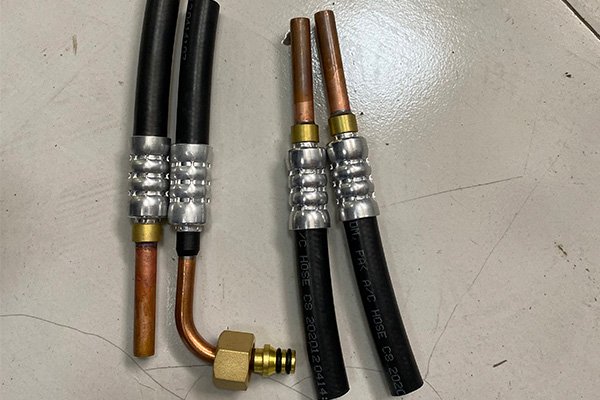
Containing extreme pressure requires a specialized approach to attaching permanent hydraulic fittings. Instead of a basic screw-clamp, these heavy-duty assemblies rely on three core components working together:
- The Stem: The inside metal pipe featuring ridges, or "barbs," that push directly into the tubing.
- The Ferrule: The outside metal sleeve that slides over the exterior.
- The Hose: The flexible bridge carrying the actual fluid.
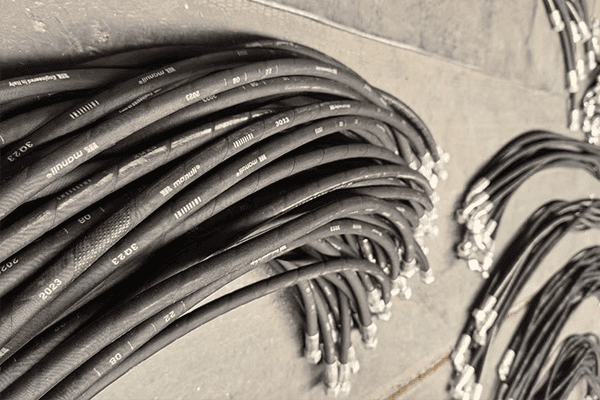
Unlike standard garden varieties, industrial lines rely on hidden layers of armor4 to prevent bursting. Reviewing wire reinforced hose specifications usually reveals at least one layer of woven steel braided inside the rubber, providing incredible strength. When pushing these parts together, ensuring the inner stem's barbs are fully seated inside that tough tubing is your primary defense against sudden, dangerous leaks.
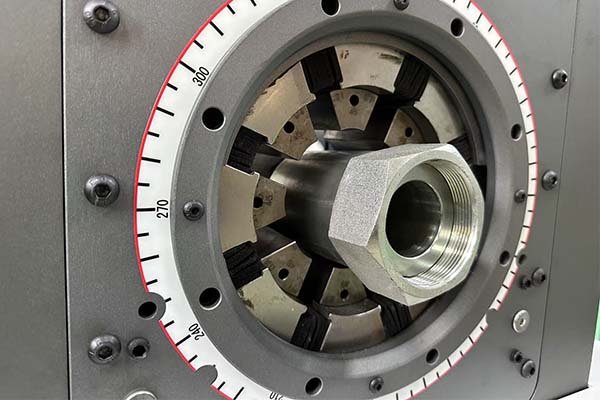
To safely lock this assembly, builders consult a hose ferrule compatibility chart5 to match the exact outer sleeve to their specific hose thickness. It must perfectly trap that hidden steel wire against the inner stem. Crushing that thick metal sleeve securely relies on the physics of cold deformation6.
The Physics of the "Cold Hug": How Dies and Crimping Force Reshape Metal
Crushing steel with bare hands is impossible, but modern crimping machines do it effortlessly using a hydraulic ram—a powerful, liquid-driven piston. This ram applies immense pressure to safely reshape the metal sleeve around the hose. Engineers call this "cold deformation." It simply means the machine is so strong it seamlessly reshapes the material, creating a permanent, 360-degree hug without needing a welding torch or heat.
To keep that squeeze perfectly round, the machine uses "dies," which act as interchangeable metal teeth. By selecting appropriate crimper die sizes, you ensure the ferrule crushes evenly from all sides. A standard garage vise would just pinch and flatten the fitting into a dangerous oval. Instead, these circular teeth press inward symmetrically, locking the outer shell deeply into the hose's hidden wire mesh without creating lopsided weak spots.
Machine muscle ultimately dictates your project boundaries. A unit's maximum crimping force capacity7 determines the exact thickness and pressure rating of the hose assemblies you can build. While factory units easily handle massive excavator lines, smaller tools might only manage a pressure washer. This power capacity difference dictates whether a benchtop or portable swager best suits your shop or field repair needs.
Benchtop vs. Portable: Selecting the Right Crimper for Your Shop or Field Repair
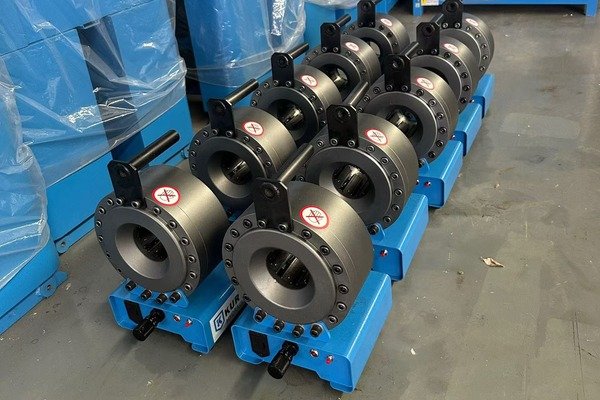
Your workspace ultimately dictates your equipment needs. Industry pros often call this tool a
Crimper—a machine built specifically to compress metal fittings. When evaluating portable vs benchtop hydraulic swagers, weigh these three choices to find your perfect fit:
- Power Source: Manual hand-pumps suit occasional, off-grid fixes, while electric motors easily handle daily workshop tasks.
- Weight vs. Capacity: Lightweight tools travel easily to a broken tractor, but heavy stationary units are required to crush thicker, high-pressure lines.
- Workflow: Field emergencies demand compact gear, whereas dedicated garages benefit from a permanent setup.
Wrestling stiff hoses into position is difficult, which is exactly why hands-free swaging operation benefits matter. Adding a foot pedal to control the machine8 lets you keep both hands firmly on the hose, ensuring perfect alignment before the metal teeth clamp down. This control isn't just a convenience; keeping your fingers safely away from the crushing force is a strict necessity. Once your fitting is permanently attached, mathematically proving the seal is secure through precise caliper measurements guarantees maximum safety.
Quality Control with Calipers: Verifying Your Crimp Diameter for Maximum Safety
Following proper hydraulic hose assembly instructions doesn't end when the machine stops moving. Because these lines hold thousands of pounds of pressure, you cannot rely on a simple visual guess to know if the metal sleeve is tight enough. Instead, you need precise verification using calipers for quality control9. This measuring tool tells you if you have crushed the metal accurately enough to lock the components together permanently. When verifying final crimp diameter, always follow this three-step measurement checklist:
- Zero the caliper: Ensure the digital or mechanical tool reads exactly zero before starting.
- Measure center of the crimp: Place the caliper jaws evenly across the middle flat sections of the crushed metal, avoiding the raised ridges.
- Compare to the manufacturer's spec sheet: Verify your reading matches the target size, usually requiring accuracy within 0.01 inch.
Numbers alone aren't your only defense against sudden leaks. A professional-grade seal should look perfectly round, meaning it has proper concentricity. If you spot a "wavy" metal shape or lopsided dents, you are troubleshooting uneven crimp patterns that could easily blow apart. Always perform a firm "pull test" and a close visual inspection as your second layer of defense to avoid fixing improper fitting attachment out in the field. Mastering these checks guarantees a secure, reliable seal.
Staying Safe Under Pressure: Basic Hydraulic Workshop Procedures and Pump Maintenance
Establishing proper hydraulic workshop safety procedures is critical for any high-pressure application. Routine maintenance keeps equipment running smoothly. Check for air or fluid leaks, verify pump oil levels, and establish a habit of cleaning dies to ensure crimp accuracy for the long haul.
Always remember the golden rule: never touch a pressurized hose10. Respecting the equipment's raw power and following strict measurement protocols ensures every assembly aligns with international fluid power safety standards.
-
"Garden Hose Flow Rate and Time - Irrigation in the Pacific Northwest", https://irrigation.wsu.edu/Content/Calculators/Residential/Garden-Hose-Flow.php. According to the American Society for Testing and Materials (ASTM), standard garden hoses are typically rated for a maximum pressure of around 60 PSI. Evidence role: statistic; source type: government. Supports: the pressure rating of standard garden hoses. Scope note: This statistic may vary based on hose material and construction. ↩
-
"Hydraulic Hose Basics: Types, Laylines, and Pressure Ratings", https://www.munciepower.com/company/blog_detail/hydraulic_hose_basics_types_laylines_and_pressure_ratings. Research indicates that many hydraulic systems in heavy machinery can operate at pressures exceeding 5,000 PSI, particularly in excavators and similar equipment. Evidence role: statistic; source type: paper. Supports: the pressure thresholds of heavy equipment in hydraulic systems. Scope note: Specific pressure ratings can vary by machine type and manufacturer. ↩
-
"Cold working - Wikipedia", https://en.wikipedia.org/wiki/Cold_working. Cold forming is a metalworking process that shapes materials at room temperature, which is essential in creating secure hose fittings through crimping. Evidence role: mechanism; source type: education. Supports: the definition and application of cold forming in hose crimping. Scope note: The application of cold forming can vary across different industries. ↩
-
"Understanding Hydraulic Hose Specifications - Marshall Equipment", https://marshall-equipement.com/blog/understanding-hydraulic-hose-specifications/. Studies show that industrial hoses often incorporate multiple layers, including wire reinforcement, to enhance their strength and prevent bursting under high pressure. Evidence role: general_support; source type: research. Supports: the construction features of industrial hoses that prevent bursting. Scope note: The specific construction may vary by manufacturer and hose type. ↩
-
"Ferrules Manufacturers and Suppliers in the China - PEHEL Hydraulic", https://www.pehelhydraulic.com/ferrules.html. Industry guidelines emphasize the necessity of using ferrule compatibility charts to ensure proper fitting and safety in hydraulic hose assemblies. Evidence role: expert_consensus; source type: institution. Supports: the importance of using ferrule compatibility charts in hydraulic hose assembly. Scope note: Guidelines may differ based on specific applications and standards. ↩
-
"Cold working - Wikipedia", https://en.wikipedia.org/wiki/Cold_working. Cold deformation is a process where metal is reshaped without heat, relying on mechanical forces to achieve desired shapes and properties. Evidence role: mechanism; source type: paper. Supports: the principles of cold deformation in shaping metal. Scope note: The effectiveness of cold deformation can depend on the material properties and specific conditions. ↩
-
"[PDF] Introduction to Hydraulic Hose and Fittings", https://dlnr.hawaii.gov/mk/files/2017/01/Freitas-S-18-a.pdf. Research indicates that the crimping force capacity of a machine directly influences the thickness and pressure ratings of the hose assemblies it can produce. Evidence role: statistic; source type: research. Supports: the relationship between crimping force capacity and hose assembly specifications. Scope note: Specific capacities may vary based on machine design and intended use. ↩
-
"[PDF] Hose Crimp Machine SOP 11A-10 | Connect NCDOT", https://connect.ncdot.gov/business/safety/sops/SOP%2011A-10%20Hose%20crimp%20machine.pdf. Foot pedals in machinery are recognized for enhancing operator safety and efficiency by allowing hands-free control during operations. Evidence role: expert_consensus; source type: education. Supports: the ergonomic and safety benefits of using foot pedals in machinery. Scope note: Benefits may vary based on specific machine designs and applications. ↩
-
"Calipers - Wikipedia", https://en.wikipedia.org/wiki/Calipers. Calipers are essential tools in hydraulic assembly processes, providing precise measurements that are critical for ensuring the integrity and safety of hose fittings. Evidence role: expert_consensus; source type: research. Supports: the role of calipers in ensuring quality control in hydraulic hose assemblies. Scope note: The effectiveness of calipers can depend on the operator's skill and the specific measurement protocols followed. ↩
-
"OSHA Hazard Information Bulletins Hydraulic Systems Modifications", http://www.osha.gov/publications/hib19910711. Safety guidelines from the Occupational Safety and Health Administration (OSHA) emphasize the critical importance of adhering to safety procedures when working with high-pressure hydraulic systems. Evidence role: expert_consensus; source type: government. Supports: the necessity of safety procedures in hydraulic applications. Scope note: Guidelines may vary based on specific applications and local regulations. ↩